Cloud Solutions
aibizmod delivery
Strategy, implementation, launch, and support with one connected technical team.
What This Service Solves
Identifying the hurdles
On-premise infrastructure or legacy hosting arrangements create fixed costs regardless of actual usage, require specialist maintenance, and cannot scale quickly when demand changes. Businesses running critical workloads on ageing infrastructure face increasing reliability risk and are locked out of the services that modern cloud platforms provide — managed databases, serverless functions, container orchestration, and global content delivery.
- Fixed infrastructure costs with no ability to scale capacity up or down with demand
- On-premise hardware approaching end of life with increasing maintenance burden
- Manual deployment and configuration processes that slow down development cycles
- Disaster recovery plans that exist on paper but are not regularly tested or automated
Our approach & solution
We design and implement cloud architectures on AWS, Azure, or GCP that match your workload requirements, migrate existing applications without disruption, and configure the infrastructure-as-code and monitoring that makes ongoing management efficient rather than manual.
- Cloud architecture design matched to your workload patterns, reliability requirements, and budget
- Migration planning and execution with minimal disruption to running services
- Infrastructure-as-code configuration using Terraform or AWS CloudFormation for reproducible environments
- Cost optimisation review covering right-sizing, reserved capacity, and unused resource cleanup
What This Service Includes
Cloud Architecture Design
Cloud Architecture Design
Design multi-tier cloud architectures on AWS, Azure, or GCP that balance performance, availability, security, and cost for your specific workload.
Cloud Migration
Cloud Migration
Plan and execute the migration of existing applications, databases, and infrastructure from on-premise or legacy hosting to cloud with minimal service disruption.
Serverless Architecture
Serverless Architecture
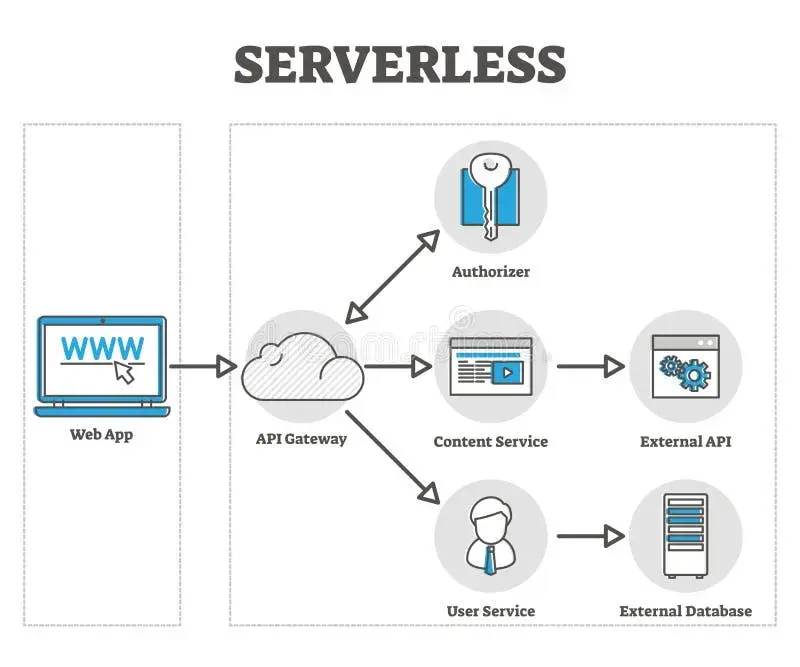
Design and deploy serverless applications using AWS Lambda, Azure Functions, or GCP Cloud Run for workloads that benefit from event-driven, auto-scaling compute.
Infrastructure as Code
Infrastructure as Code
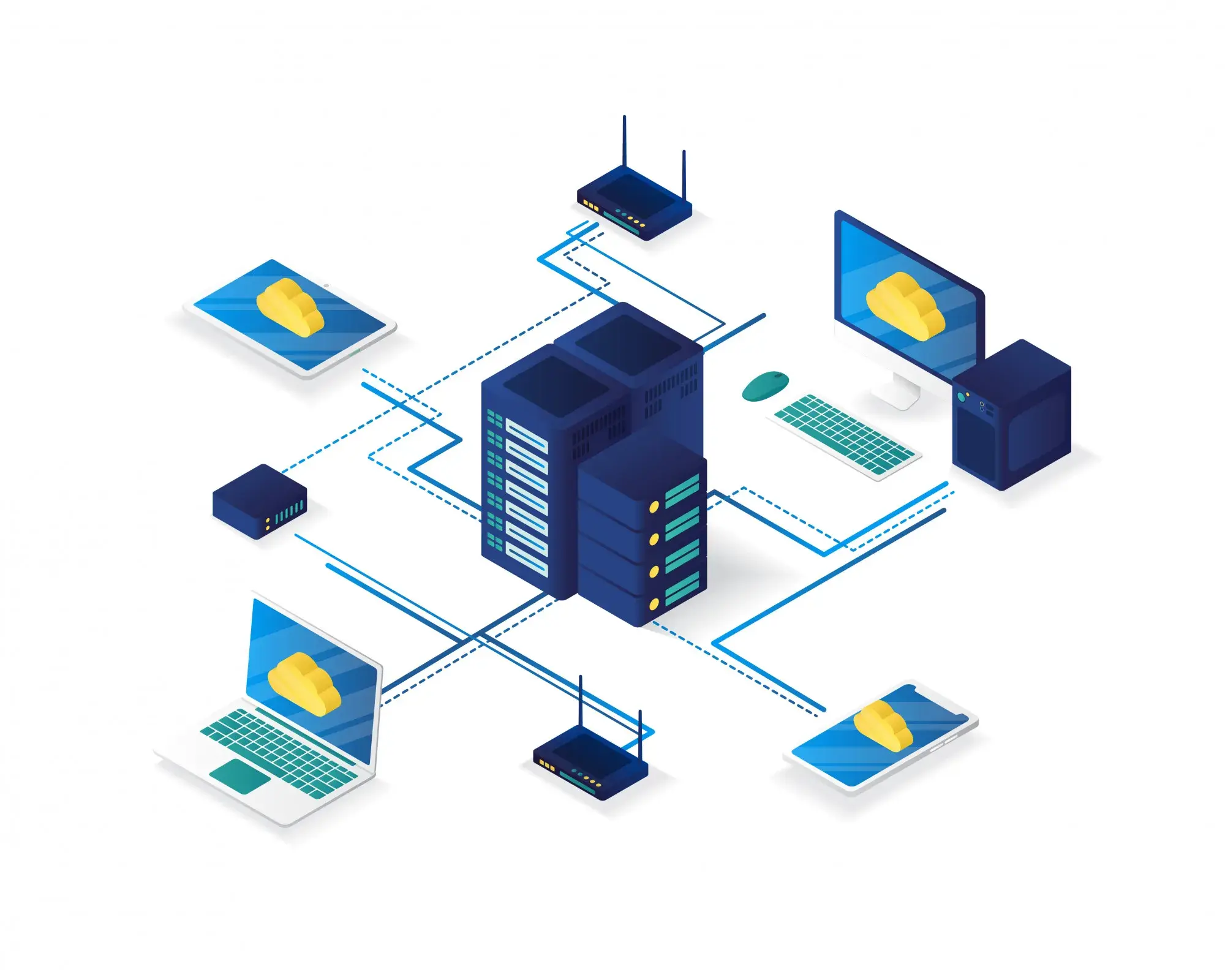
Implement Terraform or AWS CloudFormation to define and manage cloud infrastructure in version-controlled code, enabling reproducible environments and automated provisioning.
Cloud Security Configuration
Cloud Security Configuration
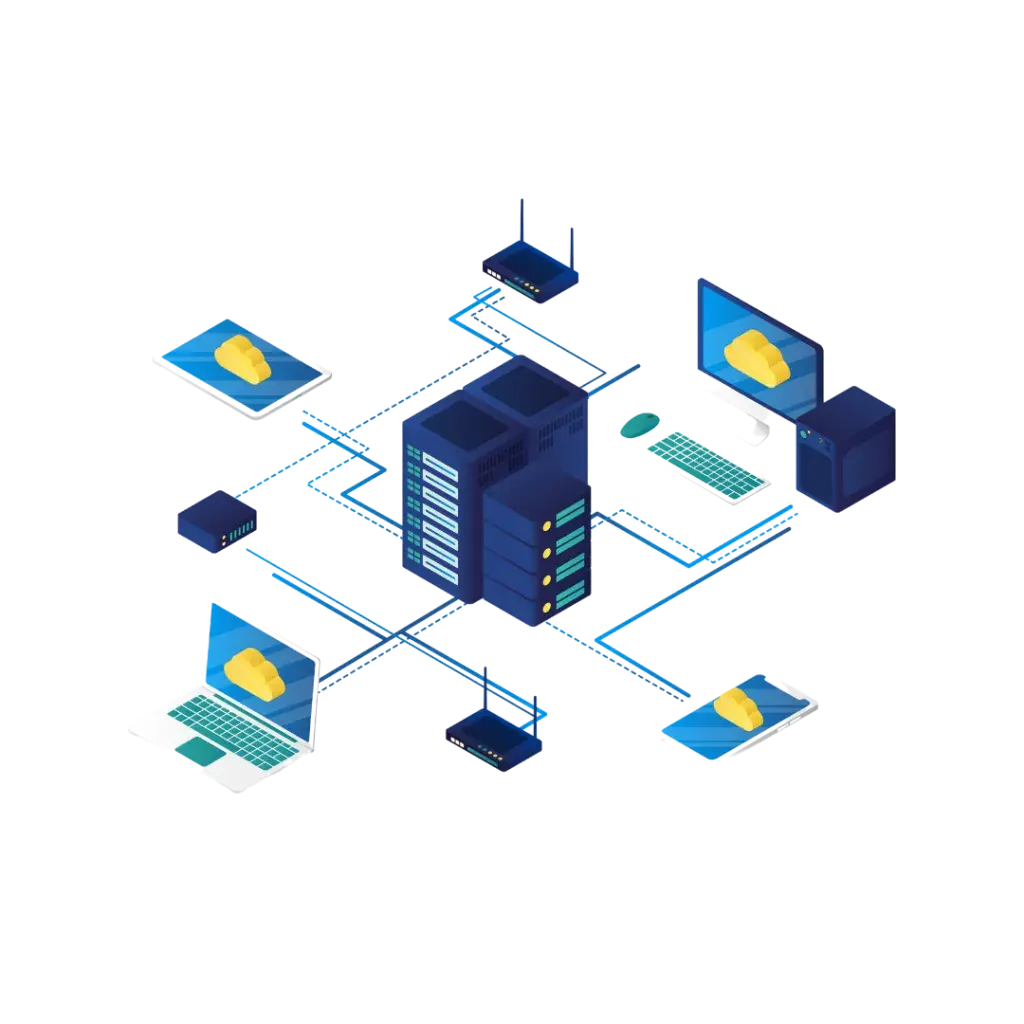
Configure IAM policies, security groups, VPC architecture, encryption, and audit logging to ensure cloud environments meet your security and compliance requirements.
Cost Optimisation
Cost Optimisation
Audit existing cloud spend, identify over-provisioned resources and unused services, and implement right-sizing and reserved instance strategies to reduce monthly costs.
How Businesses Use This
Real-world applications across industries — drag or click the cards to explore.


Migration from VPS to AWS for a Growing Product
A SaaS company outgrew their fixed VPS hosting as user numbers grew. We migrated their application to AWS ECS with auto-scaling, reducing infrastructure cost and improving availability.
Business Outcomes You Can Expect
Global Distribution
Content delivery networks and multi-region deployments give globally distributed users fast access to your application without managing international infrastructure directly.
Controlled Costs
Cloud environments sized correctly for actual usage and monitored for waste produce predictable costs. Regular optimisation reviews prevent the gradual cost creep that affects unmanaged cloud accounts.
Built-in Redundancy
Multi-availability zone deployments provide redundancy that is prohibitively expensive to replicate with on-premise hardware, at a fraction of the cost of equivalent physical infrastructure.
Reproducible Environments
Infrastructure-as-code means development, staging, and production environments can be created consistently and reverted to a known state, removing environment drift as a source of bugs.
Reduced Infrastructure Management Overhead
Managed cloud services — databases, queues, container orchestration — shift maintenance responsibility to the provider, freeing your team from patching, backups, and hardware management.
Capacity That Scales with Demand
Cloud resources scale up during peak load and down during quiet periods, removing the choice between over-provisioning for peaks or under-provisioning for normal load.
Questions Before We Start
A Few Things Clients Usually Ask
Find answers to common questions about Cloud Solutions solutions, setup procedures, scoping timelines, and deliverables.
How do you decide between AWS, Azure, and GCP?
The choice depends on your existing technology stack, team familiarity, and workload characteristics. AWS has the broadest service catalogue and is generally the strongest choice for new projects. Azure is the natural fit if you have existing Microsoft infrastructure — Active Directory, SQL Server, Office 365. GCP is worth considering for data-intensive workloads and machine learning use cases. Most businesses do not need to evaluate all three — one is usually a clear fit given their context.
How much disruption does a cloud migration typically cause?
A well-planned migration should cause minimal disruption. We use a lift-and-shift approach for the initial migration, running the cloud environment in parallel with the existing one and switching over during a low-traffic window. Applications that require architectural changes for cloud are refactored as a separate phase after the initial migration is stable.
How do you manage cloud costs after migration?
We configure billing alerts, implement tagging policies for cost attribution, and schedule a cost review at 30 and 90 days post-migration. We also review reserved instance purchasing once the usage pattern is stable, which typically reduces compute costs by 30 to 40 percent compared to on-demand pricing.
What security standards do you configure by default?
By default we configure IAM with least-privilege policies, multi-factor authentication for console access, encryption at rest and in transit for all storage and database services, VPC with private subnets for application workloads, CloudTrail or equivalent audit logging, and automated security scanning for common misconfigurations. Additional controls are added based on compliance requirements.
Do you host cloud project management software?
Yes. We host and operate cloud project management software on AWS, Azure, and GCP for SaaS product teams and internal IT departments. The hosting layer covers the application runtime, database, file storage, identity provider, observability, backup, and disaster recovery — designed to keep the application reliably available as users grow. This hosting is delivered alongside our custom software development work for clients who want a single team to build and run the platform.