DevOps
aibizmod delivery
Strategy, implementation, launch, and support with one connected technical team.
What This Service Solves
Identifying the hurdles
Development teams without a proper CI/CD pipeline deploy manually, infrequently, and with high anxiety. Releases are risky, rollbacks are painful, and the time between a feature being ready and it being live is measured in weeks rather than hours. Infrastructure is configured manually on individual servers, creating snowflake environments that cannot be reproduced and are difficult to debug when something goes wrong in production.
- Manual deployments that are error-prone and require developer availability for every release
- No automated testing in the deployment pipeline, so bugs reach production that could have been caught
- Infrastructure configured manually with no version control or reproducibility
- Long release cycles because deployment risk discourages frequent shipping
Our approach & solution
We implement CI/CD pipelines that automate build, test, and deployment stages, configure infrastructure-as-code so environments are reproducible, and containerise applications to eliminate environment-specific inconsistencies. The result is a deployment process that is faster, safer, and requires less manual coordination.
- CI/CD pipeline with automated build, test, lint, and deployment stages
- Container configuration using Docker and Kubernetes for environment consistency
- Infrastructure-as-code for all environment configuration, versioned and peer-reviewed
- Rollback mechanisms and deployment controls so releases can be safely reverted
What This Service Includes
CI/CD Pipeline Implementation
CI/CD Pipeline Implementation
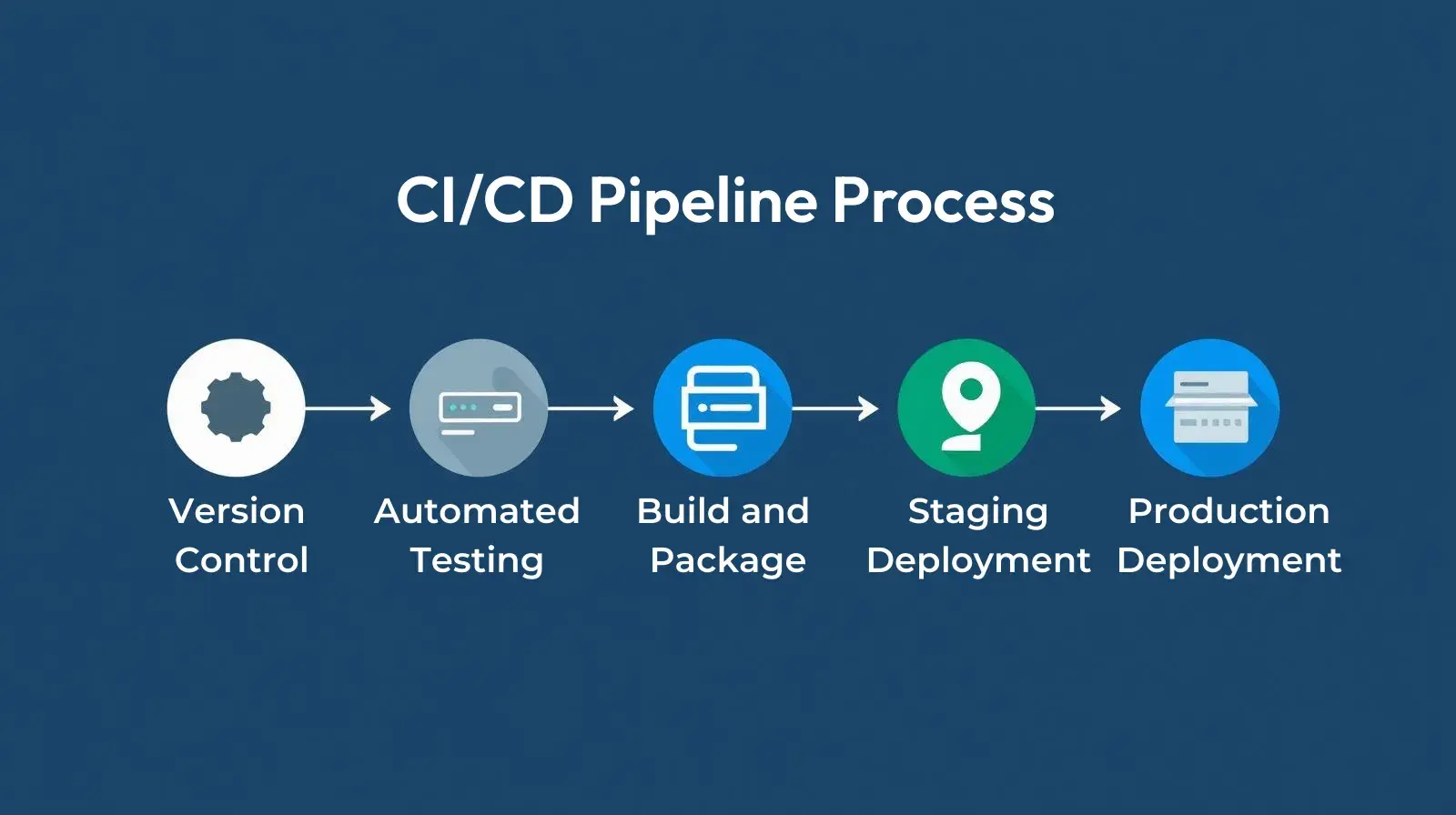
Build automated pipelines using GitHub Actions, GitLab CI, or CircleCI that run tests, build artefacts, and deploy to staging and production on each merge.
Containerisation
Containerisation
Dockerise your application and its dependencies so it runs consistently across development, staging, and production environments, eliminating environment drift.
Kubernetes Orchestration
Kubernetes Orchestration
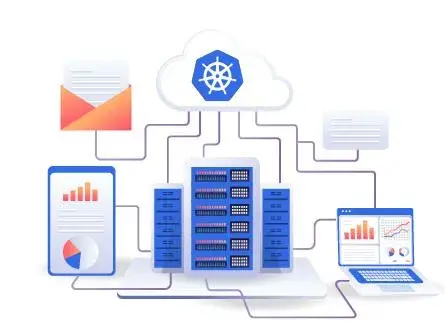
Configure Kubernetes clusters for container orchestration, including deployments, services, health checks, autoscaling, and rolling update strategies.
Infrastructure as Code
Infrastructure as Code
Implement Terraform, Pulumi, or AWS CDK to define all infrastructure in version-controlled code, making environments reproducible and changes auditable.
Secrets and Configuration Management
Secrets and Configuration Management
Configure secure secrets management using AWS Secrets Manager, HashiCorp Vault, or GitHub Secrets so sensitive configuration is never stored in code repositories.
Deployment Strategy Design
Deployment Strategy Design

Implement blue-green, canary, or rolling deployment strategies that allow updates to be released gradually with automatic rollback if health checks fail.
How Businesses Use This
Real-world applications across industries — drag or click the cards to explore.


CI/CD Pipeline for a Development Team
A SaaS startup was deploying manually via SSH. We built a GitHub Actions pipeline that runs tests, builds a Docker image, pushes to ECR, and deploys to ECS on every merge to main.
Business Outcomes You Can Expect
Reduced Deployment Risk
Frequent, small, automated deployments are significantly lower risk than infrequent, large, manual ones. The longer code sits undeployed, the larger and riskier each release becomes.
Safe Rollbacks
Proper deployment strategies with health checks and automated rollback mean a bad deployment can be reversed in minutes rather than requiring emergency hotfixes under pressure.
Auditable Infrastructure Changes
Version-controlled infrastructure means every environment change goes through a pull request review and leaves a complete history of who changed what and when.
Environment Consistency
Containerisation and infrastructure-as-code eliminate the category of bugs caused by differences between developer laptops, staging, and production environments.
Bugs Caught Before Production
Automated tests running on every commit catch regressions before code reaches production, reducing the frequency and cost of production incidents.
Deployments Go from Hours to Minutes
Automated CI/CD pipelines remove the manual coordination overhead from releases, allowing teams to deploy frequently and confidently.
Questions Before We Start
A Few Things Clients Usually Ask
Find answers to common questions about DevOps solutions, setup procedures, scoping timelines, and deliverables.
Which CI/CD platform do you recommend?
GitHub Actions is the most common choice for teams already using GitHub, and the free tier covers most small to mid-size team needs. GitLab CI is the natural choice for GitLab users and offers a comprehensive feature set. CircleCI offers more fine-grained control over pipeline resources. The choice is usually determined by your existing version control platform rather than being a standalone decision.
Do we need Kubernetes or is Docker Compose sufficient?
For most applications with fewer than a handful of services, Docker Compose on a managed hosting platform or a single server is sufficient and significantly simpler to operate. Kubernetes is justified when you need horizontal autoscaling, multi-service orchestration, rolling deployments, or are running at a scale where the operational benefits outweigh the complexity. We recommend the simplest approach that meets your actual requirements.
How disruptive is it to introduce CI/CD to an existing project?
Less disruptive than most teams expect. We introduce CI/CD incrementally, starting with the build and basic test steps before adding deployment stages. The pipeline can run alongside existing deployment processes until the team is confident in it. The main dependency is having a reasonable test suite — we often recommend adding basic automated tests as part of the same engagement.
Can you set up DevOps for a team that has no existing infrastructure-as-code?
Yes. Many of our DevOps engagements start from scratch with teams running on manually provisioned servers. We document the existing infrastructure, implement infrastructure-as-code for all components, and migrate environments into the new setup incrementally to avoid disruption.