Business Application Development
aibizmod delivery
Strategy, implementation, launch, and support with one connected technical team.
What This Service Solves
Identifying the hurdles
Businesses accumulate manual processes around the edges of their software stack. A billing system that generates invoices but requires a spreadsheet to track what has been billed. A project management tool that tracks tasks but not the specific metrics the business cares about. An internal process that has outgrown the email thread it was managed in. These are processes that custom business applications can automate, but they are specific enough that no off-the-shelf product covers them precisely.
- Manual workflows that have outgrown the spreadsheet or email thread managing them
- Billing or financial processes requiring a system that matches specific calculation and reporting logic
- Internal tooling needed by operations teams that does not exist as a product and cannot be approximated well enough by available tools
- Multiple systems that need to be connected in ways their native integrations cannot support
Our approach & solution
We build focused business applications for specific operational processes — workflow tools, billing engines, internal dashboards, project tracking systems — designed exactly for the process that needs automating, not adapted from something designed for a different use case.
- Scoped application design focused on the specific process to automate without adding scope creep
- Integration with the systems the process connects to — CRM, accounting, ERP, external APIs
- User interface appropriate for the role using the tool, including internal tools optimised for power users
- Deployment on your existing infrastructure or cloud account so you own and control the system
What This Service Includes
Workflow Automation Tools
Workflow Automation Tools
Build applications that automate multi-step operational workflows — approvals, status tracking, notifications, and data collection — replacing manual coordination between systems.
Internal Tooling
Internal Tooling
Develop internal dashboards, admin interfaces, and operational tools optimised for the specific needs of operations, finance, or technical teams.
Billing and Invoicing Systems
Billing and Invoicing Systems
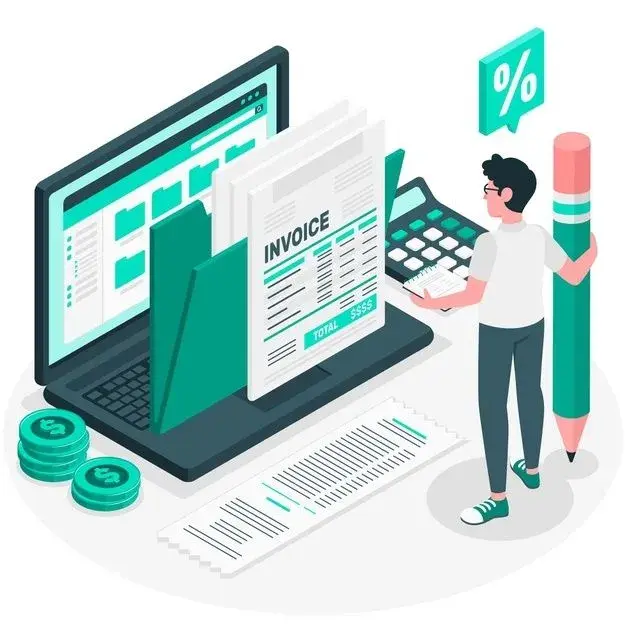
Build billing engines and invoicing systems with calculation logic, payment tracking, and reporting matched to your specific pricing model and business rules.
Project and Task Management Systems
Project and Task Management Systems
Develop project tracking tools with the specific fields, statuses, and reporting your team needs — without the overhead of a general-purpose platform that covers use cases you will never use.
Data Processing Applications
Data Processing Applications
Build applications that ingest, validate, transform, and process data from external sources or internal systems, replacing manual import and manipulation work.
Integration Applications
Integration Applications
Build connector applications that bridge systems whose native integrations are insufficient, automating data flow and reducing the manual reconciliation work between systems.
How Businesses Use This
Real-world applications across industries — drag or click the cards to explore.


Time Billing System for a Consultancy
A consultancy needed a billing system that tracked time against client matters, applied different rate cards per client, and generated invoices with a specific format that no standard billing tool could match.
Business Outcomes You Can Expect
Owned by the Business
A custom application deployed on your own infrastructure or cloud account is not subject to price increases, feature removal, or vendor shutdown. You own the code and control the roadmap.
Designed for the People Using It
Internal tools built for specific roles can be optimised for the exact tasks those roles perform, with a UI that reflects their workflow rather than the general-purpose design of a product sold to many different users.
Integration That Works the Way the Process Needs
A custom integration between your business application and adjacent systems can handle the exact data mapping and timing the process requires, rather than fitting within the constraints of a pre-built connector.
Audit Trail by Default
Every action in a properly built business application is logged with user, timestamp, and state change — providing an audit trail that spreadsheets and email threads cannot.
Process Logic Codified
Business rules, calculation logic, and workflow steps encoded in software are applied consistently every time, removing the variation and errors that come from manual execution.
Manual Work Eliminated
A business application built for a specific process removes the manual steps that consume staff time without adding value — lookups, copy-paste between systems, email-based approvals.
Questions Before We Start
A Few Things Clients Usually Ask
Find answers to common questions about Business Application Development solutions, setup procedures, scoping timelines, and deliverables.
How do you scope a business application to avoid it becoming a large, complex project?
We start every business application engagement with a scoping workshop that maps the current manual process in detail, identifies the core problem that software needs to solve, and explicitly excludes the adjacent features that would be nice to have but are not needed for the core workflow. A focused application that does one thing well is more valuable to deliver quickly than a broad one that takes a year to launch.
Can you integrate the application with our existing systems?
Yes. Most business applications are useful specifically because they connect to existing systems and automate data flows between them. We assess the available integration methods for each system during scoping — most modern business software exposes a REST API, and older systems often have database access or file export options we can work with.
How long does a business application typically take to build?
A focused application covering a single operational workflow — a billing system, a returns processor, a commission calculator — typically takes six to twelve weeks. More complex applications with multiple modules and integrations take three to six months. The key determinant is how clearly defined the requirements are at the start and how quickly stakeholders can confirm decisions during development.
Do you build cloud based project management software?
Yes. Cloud based project management software is one of the most common business applications we develop. We build cloud project management software with task tracking, resource allocation, time logging, and reporting — designed around your team's actual workflow rather than adapted from an off-the-shelf product. The resulting system is hosted on your cloud account, owned outright, and free of per-seat licensing fees.
Do you build admin interfaces as part of the application?
Yes. Most business applications need an admin layer for configuration management, user administration, audit log review, and data correction. We build these as part of the application rather than requiring direct database access for administration tasks.